
What does the future of enrollment look like at Coxsackie-Athens Central School District? To better understand that question, the district took a snapshot of the community during the 2025-2026 school year, looking beyond student enrollment numbers to examine census data, housing trends, demographics, and changes in how families choose to educate their children.
The data analysis, conducted by Jerome D. Steele and Jerome A. Steele, looked beyond student enrollment numbers to examine census data, housing trends, demographics, and changes in how families choose to educate their children.
The findings point to a long-term challenge facing C-A and other districts across the region: a declining school-age population that is expected to continue shaping enrollment in the years ahead.
A 25-Year Decline in Enrollment
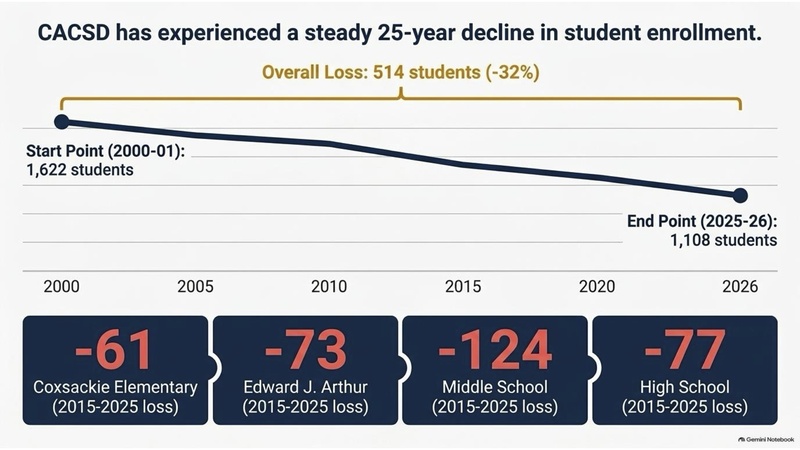
Coxsackie-Athens has experienced a steady decline in student enrollment over the past 25 years, falling from 1,622 students in 2000-2001 to 1,108 students in 2025-2026. That represents a loss of 514 students, or approximately 32% of the district's enrollment.
C-A is not alone in experiencing this trend. Neighboring districts have also seen significant declines, including Catskill, which has experienced a 25% decrease, and Cairo-Durham, which has seen a 21% decrease.
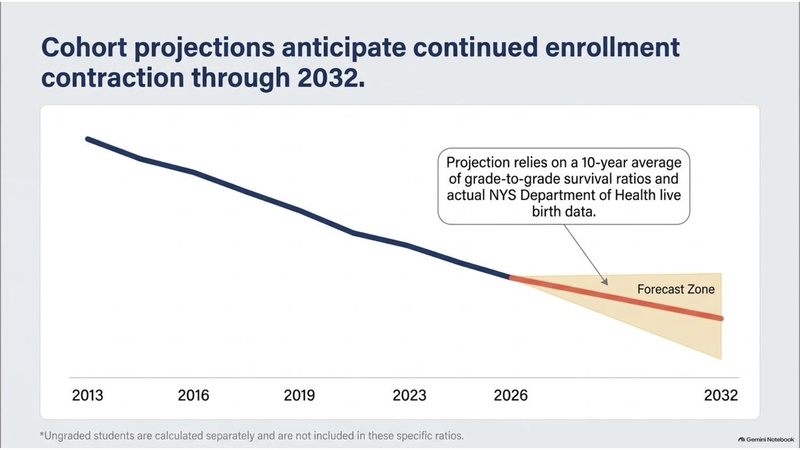
The study uses historical enrollment patterns and demographic information to project future enrollment through 2032. Those projections anticipate that enrollment will continue to decline, making it important for the district to understand what is driving these changes and how best to prepare.
Understanding the Bigger Picture
To understand why enrollment is declining, the district looked beyond its own student counts and examined the population it serves.
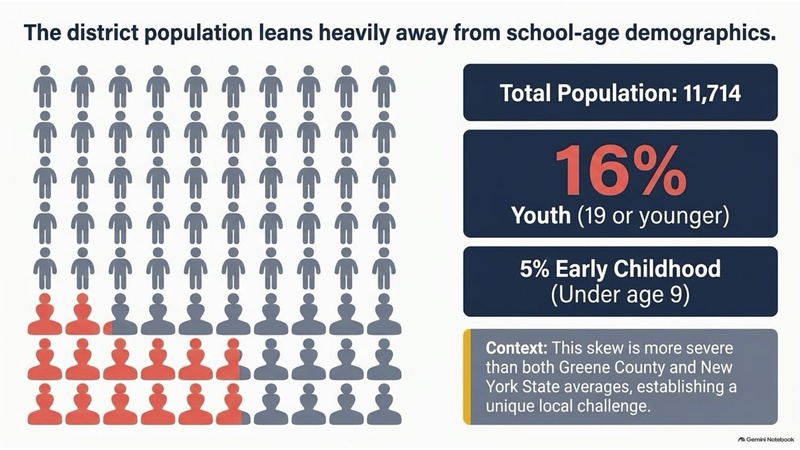
According to the study, only 16% of the district's population is age 19 or younger, while just 5% is under age 9. This points to a community whose population increasingly consists of adults beyond traditional school-age years, creating a smaller pool of potential future students.
The study identifies three major forces contributing to the district's enrollment trends: changing demographics, housing affordability, and shifts in schooling choices.
Demographics and an aging population
Declining live births and an aging population are contributing to a smaller school-age population. With fewer young children entering the school system, enrollment is expected to remain under pressure in the coming years.
Housing affordability and availability
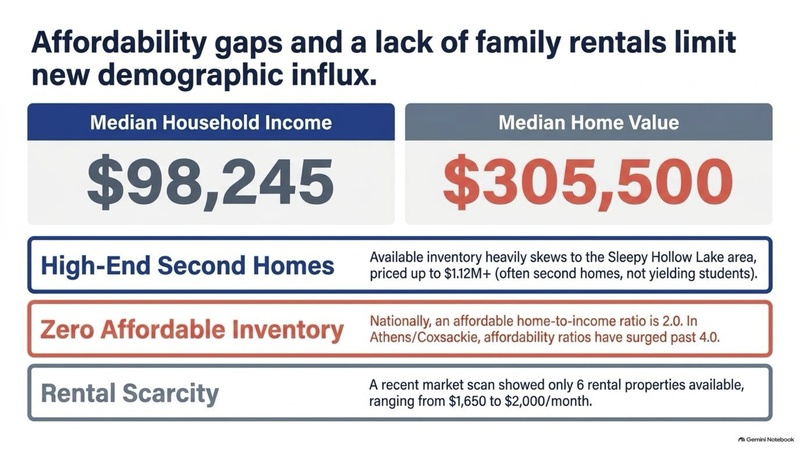
Housing trends also play an important role. The study identifies a gap between household incomes and housing costs, with a reported median household income of $98,245 and a median home value of $305,500.
Limited affordable homeownership opportunities and a shortage of rental properties suitable for families can make it more difficult to attract new households with school-age children. While new residential developments can bring additional residents into the community, the study concludes that housing growth alone is unlikely to reverse the district's enrollment decline.
The proposed UMH housing development in Coxsackie is one example examined in the presentation. Although the project is expected to bring new residents to the area, the study projects only a modest increase in student enrollment.
Changes in schooling choices
The district is also seeing changes in how families educate their children. Since the COVID-19 pandemic, homeschooling has increased locally, while enrollment in non-public schools has declined.
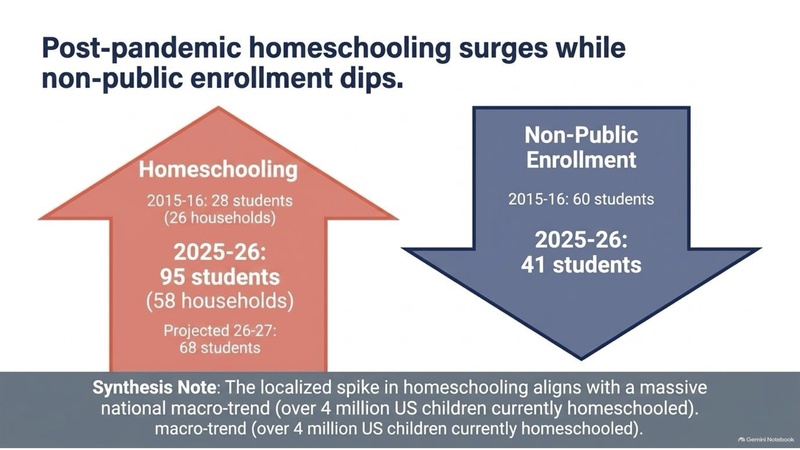
In 2015-2016, 28 students were homeschooled, compared with 68 in 2025-2026. During that same period, non-public school enrollment decreased from 60 students to 41.
These trends help explain why the district's enrollment picture cannot be understood by looking at public school enrollment alone.
Planning for a Changing Student Population
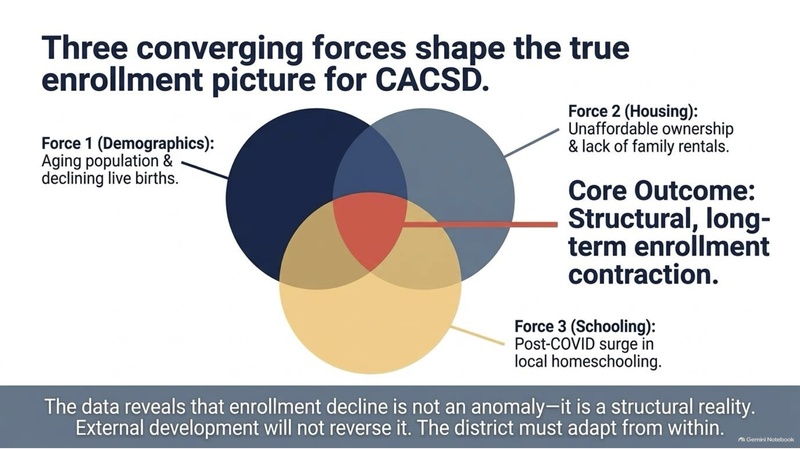
The study's central finding is that declining enrollment is not simply a temporary fluctuation. It reflects longer-term demographic and community changes that are expected to continue through 2032.
While residential development may provide some additional enrollment, it is not expected to reverse the overall trend. As a result, the study emphasizes the need for the district to adapt its operations and resources to meet the needs of a changing student population.
One area identified for further evaluation is the district's elementary school configuration. Reviewing building footprints and elementary school arrangements could help the district balance class sizes, manage costs, and make the most effective use of its available resources.
The presentation recommends assessing the financial viability of the current configuration, continuing to monitor enrollment patterns and grade-to-grade progression annually, and tracking local real estate sales with the help of community partners.
These steps would provide district leaders with updated information to support future decisions.
Developing a Long-Term Strategic Plan
The study also highlights the importance of a comprehensive, long-range strategic plan to support sustainable district operations.
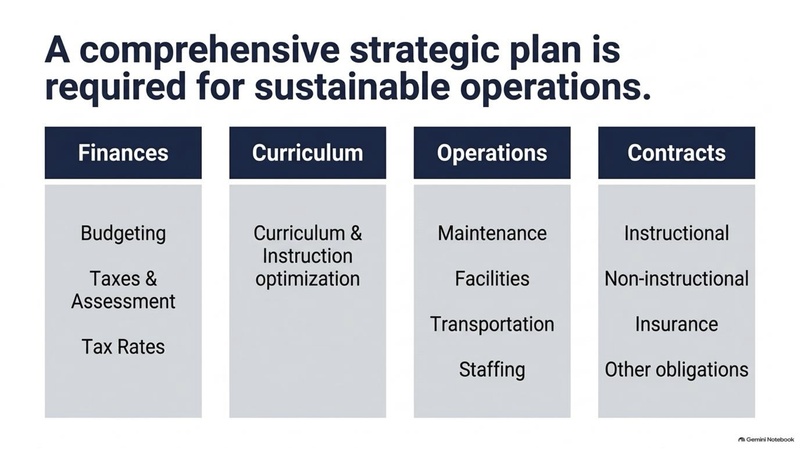
This plan would examine the district's finances, budgeting, taxes and assessments, curriculum and instruction, staffing, transportation, facilities maintenance, contracts, insurance, and other instructional and non-instructional obligations.
The goal is to align the district's resources with the needs of its students while planning responsibly for the years ahead.
Collaboration with local municipalities and Greene County is another important part of this process. Working together can help align school district planning with community development, housing trends, and broader local priorities.
Looking Ahead Together
Understanding enrollment trends is an important step in planning for the future of Coxsackie-Athens. By examining demographic data, housing conditions, and changes in schooling choices, the district can better understand the challenges ahead and evaluate the options available to it.
While the numbers present real challenges, they also provide an opportunity to plan proactively, and make informed decisions about the district's future. The next step the district will embark on is a long range financial plan. That work has begun as the district finances have closed out for the 25-26 school year. The plan will be ready for the board in February for another public presentation.
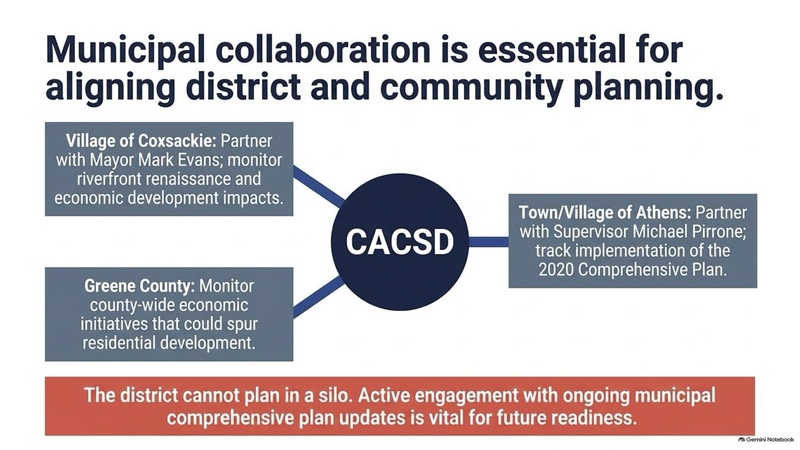
Through continued monitoring, and collaboration with the community, Coxsackie-Athens can work toward sustainable operations while continuing to serve its students and families.
Check out the full study here